
English 
T: 400-6130-885
E: cservice@xx.com
E: cservice@xx.com
5th floor, Financial Innovation Plaza, 8-2 Pusi Road, Jiangbei New District, Nanjing
Friendly link (QQ: 3004257586)
Friendly link (QQ: 3004257586)

Views: 0 Author: Site Editor Publish Time: 2026-07-06 Origin: Site
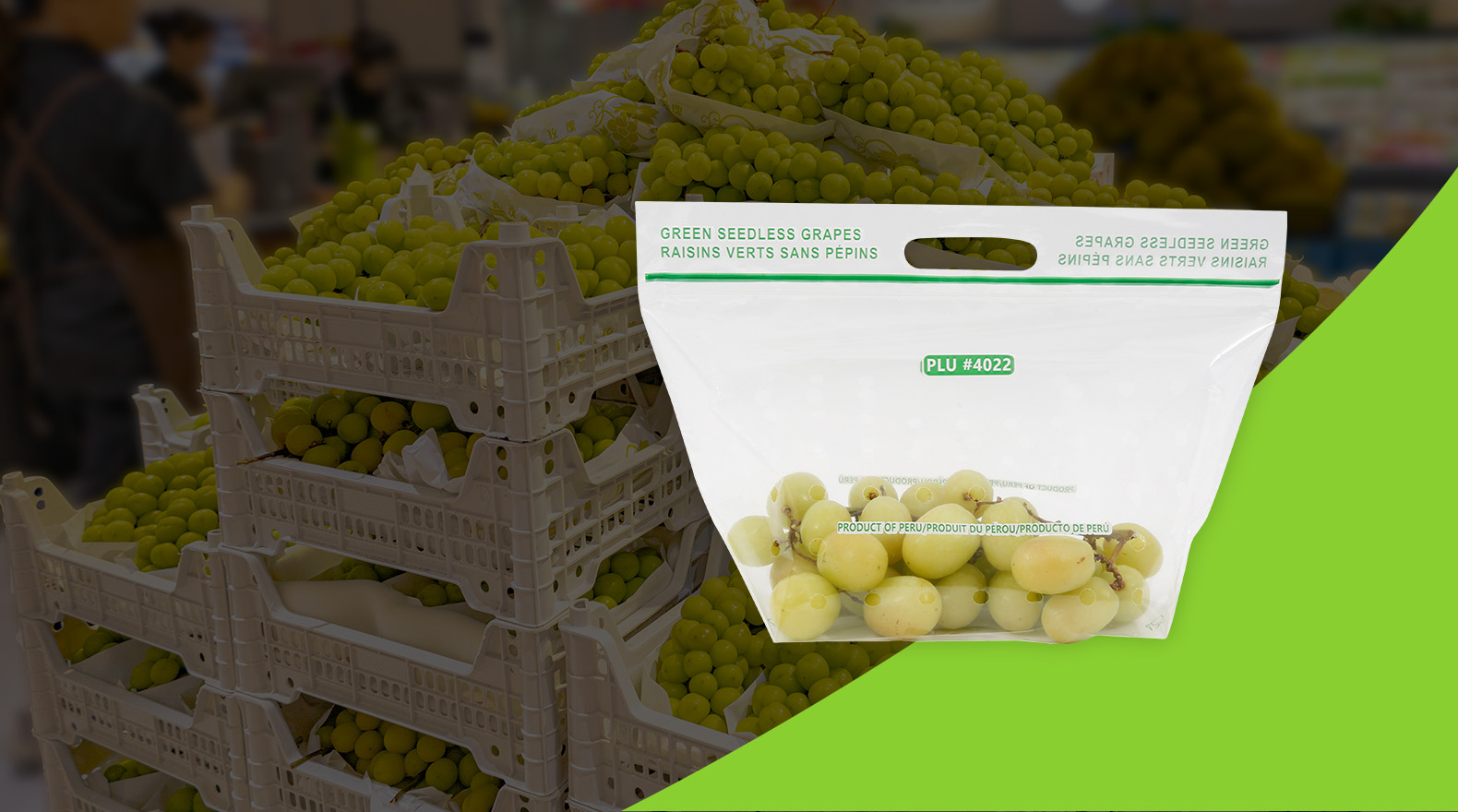
Breathable poly bags with air holes are perforated plastic packaging used to protect grape clusters during storage and retail display. They maintain freshness by allowing airflow, prevent condensation, and keep fruit visually appealing. Stand-up designs like the PLU#4022 and PLU#4499 from Fly Packing are among the most widely used options for fresh grape packaging.
Grapes are delicate. A few hours without proper protection and you're looking at crushed clusters, moisture buildup, and berries that drop straight off the stem. For growers, packers, and retailers, that kind of loss adds up fast.
That's where breathable poly bags come in. These perforated plastic bags—designed specifically for fresh grape packaging—solve a problem that traditional sealed bags can't: airflow. The small vent holes distributed across the surface allow moisture to escape, regulate temperature, and keep the fruit looking fresh from farm to shelf.
This guide covers everything you need to know about grape breathable protection bags, including how they work, what specifications to look for, and which products are worth considering.
A grapes breathable protection bags is a polyethylene or CPP (cast polypropylene) bag fitted with evenly spaced perforations. These holes aren't random—they're engineered to balance airflow and structural integrity.
The perforations prevent two of the most common problems in fresh grape packaging:
Condensation: Sealed bags trap moisture, which accelerates mold growth and causes berries to split.
Ethylene buildup: Grapes release ethylene gas as they ripen. Without ventilation, this speeds up over-ripening.
By allowing air to circulate freely, a perforated poly bag extends shelf life without compromising the visual presentation of the fruit. For retailers who display grapes in the bag, transparency and clarity matter just as much as function.
Not all plastic grape bag are built the same. Here's what to evaluate when sourcing breathable grape packaging:
Food-grade CPP or 100% new polyethylene are the two most common materials. Both are non-toxic, recyclable, and safe for direct contact with fresh produce. Heavy metal-free inks and pigments are essential if the bag carries any printed label or branding.
Vent hole diameter and spacing directly affect how much air circulates through the bag. A 9 mm hole diameter with 25 mm hole spacing—used in the Fly Packing stand-up grape bags—is a well-established specification that balances adequate ventilation with structural durability.
Most stand-up grape bags for retail are designed to hold standard cluster sizes. A wide opening of around 315 mm and a height of approximately 178 mm is typical for bags intended for red globe grape varieties.
Fly Packing, a China-based manufacturer operating since 2002, produces a range of stand-up grape bags designed for breathable protection. Here's a side-by-side look at three of their core poly bag products:
Feature | PLU#4022 | PLU#4022 Green | PLU#4499 |
|---|---|---|---|
Grape Variety | Red Globe with Seeds | Red Globe with Seeds | Red Globe with Seeds |
Raw Material | CPP, 100% new polyethylene | CPP, 100% new polyethylene | CPP, 100% new polyethylene |
Wide Opening | 315 ± 5 mm | 315 ± 5 mm | 315 ± 5 mm |
Height | 178 ± 5 mm | 178 ± 5 mm | 178 ± 5 mm |
Bag Weight | 7.0 g ± 5% | 7.0 g ± 5% | 7.0 g ± 5% |
Micron Thickness | 45 ± 10% µm | 45 ± 10% µm | 45 ± 10% µm |
Vent Hole Diameter | 9 mm | 9 mm | 9 mm |
Hole Spacing | 25 mm | 25 mm | 25 mm |
Color | Transparent | Transparent (green label) | Transparent |
Shape | Stand-up, Hexagonal | Stand-up, Hexagonal | Stand-up, Hexagonal |
Food Grade | Yes | Yes | Yes |
Recyclable | Yes | Yes | Yes |
Packaging | 1,000 pcs/box | 1,000 pcs/box | 1,000 pcs/box |
Sample Lead Time | 1–3 days | 1–3 days | 1–3 days |
All three products share the same core specifications and construction. The primary difference is the label design—PLU#4022 Green carries a green-accented recyclable label, while PLU#4499 is printed for the same grape variety with an alternate PLU code. This makes them easy to mix and match based on retailer or market requirements.
The hexagonal stand-up base isn't just an aesthetic choice. A bag that holds its shape on a shelf or in a display bin communicates product quality before a customer even picks it up. Flat bags tend to shift, collapse, and obscure the fruit inside—none of which helps sell grapes at a premium.
Stand-up poly bags also make stacking easier during logistics. Consistent shape means more predictable pallet configurations, less wasted space, and fewer damaged units during transit.
The short answer: if you're packaging fresh table grapes for retail, yes. Here's a quick guide to help you decide:
Choose a breathable poly bag if you're packaging grapes for supermarket display, cold storage, or export. The ventilation will protect quality over longer transit times.
Consider paper-based protection bags if your grapes are still on the vine and require on-farm protection from insects, birds, or UV exposure during growth.
Opt for customized printing if your market requires specific PLU codes, branding, or language on the bag. Fly Packing offers customized label options across its stand-up range.
Sourcing direct from a manufacturer like Fly Packing typically offers better pricing than buying through a distributor, especially at volume. Here's what to keep in mind:
Request a free sample first. Fly Packing offers samples with a 1–3 day lead time—use this to test fit, clarity, and perforation quality before placing a bulk order.
Confirm food-grade certification. Any poly bag in direct contact with fresh produce should carry food-grade certification and use non-toxic inks.
Check production capacity. A 40-foot container takes approximately 25 days to fulfill, so factor lead times into your supply chain planning.
Clarify payment terms. Both T/T (telegraphic transfer) and L/C (letter of credit) are accepted payment methods.
A poly bag for grapes is a perforated plastic bag designed to protect fresh grape clusters during storage, transit, and retail display. The air holes allow ventilation, which reduces moisture buildup and extends shelf life.
Vent holes allow excess moisture and ethylene gas to escape from the bag. This slows mold growth, reduces berry drop, and helps grapes maintain their firmness and appearance for longer periods.
PLU#4022 and PLU#4499 are different PLU (Price Look-Up) codes used by retailers to identify grape varieties at the point of sale. Both bags from Fly Packing share identical dimensions, material, and perforation specifications—the PLU code printed on the label is the key distinguishing factor.
Yes. Fly Packing offers customized printing on its stand-up poly bags. Retailers and packers can request specific PLU codes, logos, or language variations to meet their market requirements.
Fly Packing's stand-up grape poly bags are made from 100% new polyethylene and are marked as recyclable. The bags also use heavy metal-free inks and pigments, making them a more environmentally responsible choice compared to non-recyclable alternatives.
Fresh grapes don't travel well without proper protection. A breathable poly bag with the right perforation pattern, food-grade materials, and a stand-up design does more than just hold fruit together—it preserves quality, supports shelf presentation, and reduces waste across the supply chain.
If you're evaluating options for your next grape packaging order, the Fly Packing stand-up range is worth a closer look. Free samples are available with a short lead time, giving you a low-risk way to test quality before committing to volume.

| | 1/F, NO.81, CHANGZHEN ROAD, SHUIKOU TOWN, KAIPING CITY, GUANGDONG, CHINA |
| | +86-0-136 3183 6942 / +86-0-134 2677 9895 +86-750-2280358 |
| |


