
English 
T: 400-6130-885
E: cservice@xx.com
E: cservice@xx.com
5th floor, Financial Innovation Plaza, 8-2 Pusi Road, Jiangbei New District, Nanjing
Friendly link (QQ: 3004257586)
Friendly link (QQ: 3004257586)

Views: 0 Author: Site Editor Publish Time: 2025-11-24 Origin: Site
Selecting the right packaging is crucial for any business that deals with physical goods. You need a solution that protects your products, maintains freshness, and presents them professionally. Plastic liner bags are a versatile and essential tool for countless industries, from food service to manufacturing. They offer a reliable barrier against moisture, dust, and contamination, ensuring your items remain in perfect condition from production to final delivery.
This guide will walk you through everything you need to know about plastic liner bags. We'll cover what they are, the different materials used to make them, and their most common applications. By the end, you'll understand how to choose the perfect liner bag to meet your specific business needs, safeguarding your products and enhancing your operational efficiency.
Plastic liner bags, also known as poly bags or poly liners, are flexible bags made from various types of plastic film. They are designed to be placed inside a larger, more rigid container like a box, drum, or pail. Their primary function is to serve as a protective barrier, separating the product from the outer container and the external environment.
These liners are indispensable for maintaining product quality and preventing contamination. For example, in the food industry, they keep baked goods fresh and prevent powders from clumping. In industrial settings, they protect sensitive components from dust and moisture. Essentially, a plastic liner bag adds an extra layer of security, ensuring your products arrive at their destination in the same condition they left your facility.
Keep your products protected and fresh with our high-quality poly bags. Designed for clarity and strength, these liner bags offer unmatched transparency, ensuring your items are visible at a glance while maintaining premium durability.
Plastic liner bags are not a one-size-fits-all solution. They are made from different materials, each with unique properties suited for specific applications. The most common materials are Low-Density Polyethylene (LDPE) and High-Density Polyethylene (HDPE).
LDPE is a soft, flexible, and highly transparent material. It's known for its excellent tensile strength and puncture resistance, making it a popular choice for a wide range of applications. LDPE liners are ideal for packaging items that require clarity for visibility and a durable barrier against punctures.
Common Uses for LDPE Bags:
Food storage (bread, produce, frozen foods)
Lining boxes for small parts and components
Protecting textiles and apparel
Trash can liners
HDPE is a more rigid and less transparent material compared to LDPE. While it might feel thinner, it offers superior strength and a better moisture barrier. HDPE bags are often more cost-effective and are a great choice when high puncture resistance isn't the main priority, but protection from moisture is critical.
Common Uses for HDPE Bags:
Lining boxes for food items like meat and fish
Packaging bulk powders and grains
Utility bags and grocery store produce bags
Waste liners for commercial use
The choice between LDPE and HDPE depends entirely on your product and packaging needs.
Here is a simple comparison table to help you decide:
Feature | Low-Density Polyethylene (LDPE) | High-Density Polyethylene (HDPE) |
|---|---|---|
Flexibility | High | Low |
Clarity | High (Transparent) | Low (Translucent/Milky) |
Puncture Resistance | Good | Fair |
Moisture Barrier | Good | Excellent |
Temperature Resistance | Good | Better (can withstand higher temps) |
Cost | Generally more expensive | More cost-effective |
If you need to see your product clearly and protect it from tears, LDPE is an excellent choice. If you are packaging bulk goods where moisture protection and cost are the main concerns, HDPE is likely the better option.
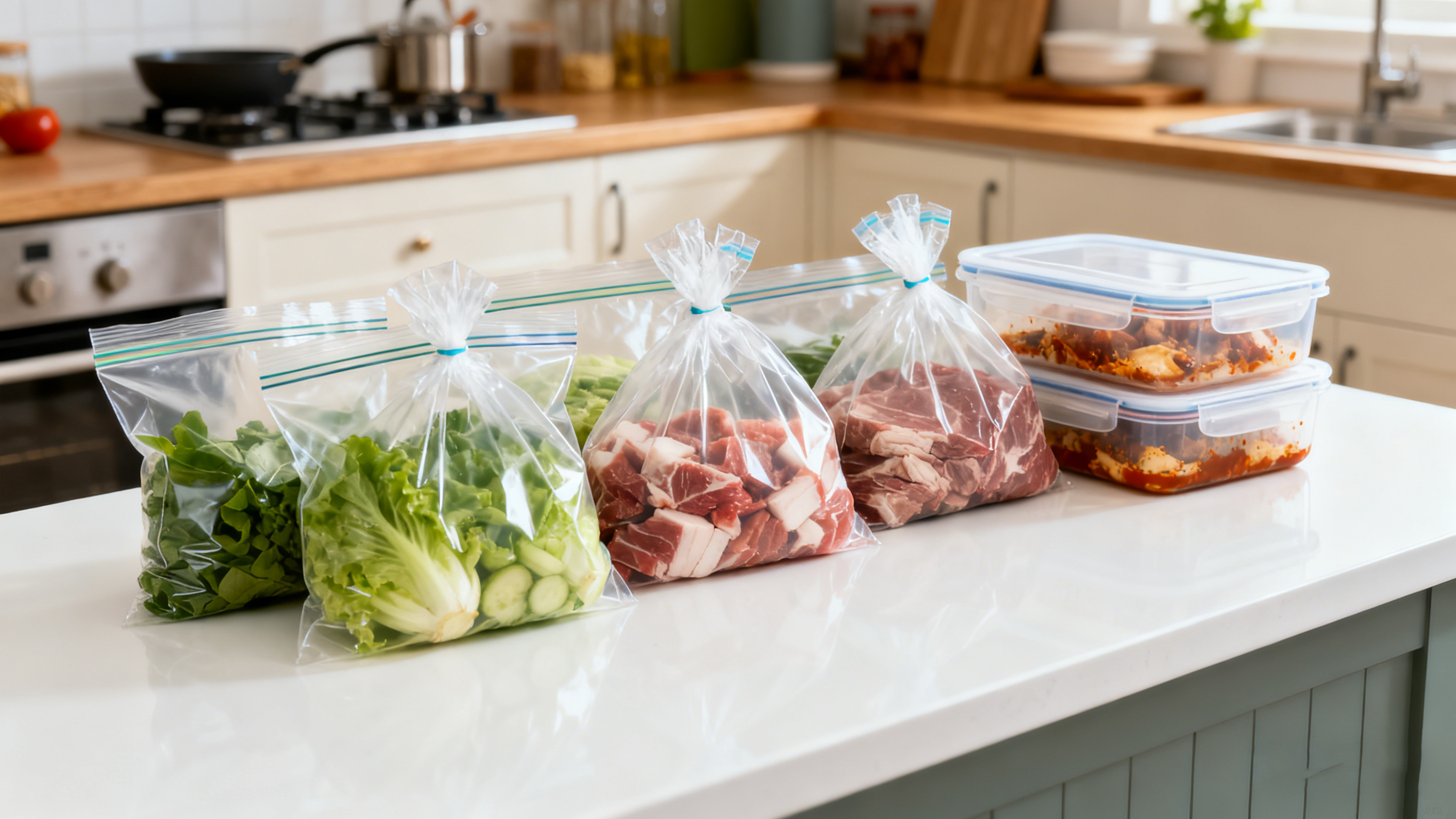
Plastic liner bags are incredibly versatile and are used in almost every industry. Their ability to protect, preserve, and contain makes them a staple in daily operations.
In the food industry, hygiene and freshness are paramount. Plastic liner bags, especially those approved by the FDA for food contact, are essential. They are used to line boxes for shipping bulk produce, baked goods, and meat. They prevent direct contact with cardboard, which can harbor moisture and bacteria, and they help extend the shelf life of perishable items.
For manufacturers, protecting components and finished goods from dust, dirt, and moisture is critical. Plastic liners are used in drums, bins, and boxes to store and transport everything from small electronic parts to large mechanical components. They help prevent corrosion and contamination, ensuring product integrity throughout the supply chain.
The medical and pharmaceutical fields require sterile environments. Poly liners are used to handle and dispose of medical waste safely. They also line containers used for shipping bulk powders and pharmaceutical ingredients, preventing cross-contamination and ensuring compliance with strict health and safety regulations.
In retail, presentation and protection go hand in hand. Clear poly bags are often used to package apparel, accessories, and other consumer goods. They keep items clean and protected from handling while allowing customers to see the product. For e-commerce businesses, they provide a lightweight and effective way to protect items during shipping.
With so many options available, selecting the right liner bag can seem daunting. Here are three key factors to consider to ensure you make the best choice for your business.
The liner bag must fit its outer container properly. A bag that is too small won't provide adequate coverage, while one that is too large can be clumsy and wasteful. To find the right size, you need to measure your container.
For Round Containers (Drums/Pails): Measure the diameter and height. The bag's width should be the diameter multiplied by 3.14, then divided by 2. The bag's length should be the height plus the diameter.
For Square/Rectangular Containers (Boxes): Measure the width, depth, and height. The bag width is the container width + depth. The bag length is the container height + half the depth.
Consider gusseted bags for square or rectangular containers. Gussets are folds on the sides or bottom of the bag that expand to fit the container's shape, providing a more tailored fit and preventing tearing.
The thickness of a plastic bag is measured in mils (one-thousandth of an inch). The required thickness depends on the weight and nature of your product.
Mil Thickness | Common Uses |
|---|---|
1 - 1.5 Mil | Lightweight items; dust protection for clothing, small parts. |
2 Mil | Standard thickness; packaging for parts, food, and protecting items in boxes. |
3 Mil | Medium-duty; provides good puncture resistance for hardware and bulkier items. |
4 - 6 Mil | Heavy-duty; for sharp-cornered items, industrial parts, and puncture protection. |
A 2-mil bag is often sufficient for general-purpose box lining, but if you're packaging items with sharp edges or significant weight, a thicker bag (4-mil or more) is a safer bet.
Depending on your application, you may need bags with special features.
FDA-Approved: Essential for any application involving direct contact with food or pharmaceuticals.
Anti-Static: Necessary for packaging sensitive electronic components to protect them from static discharge.
VCI (Vapor Corrosion Inhibitor): Used to protect metal parts from rust and corrosion during shipping and storage.
Color: While clear bags are standard, colored bags can be used for color-coding inventory or hiding contents for privacy.
Plastic liner bags are a fundamental component of modern packaging. They provide a cost-effective and reliable way to protect your products, maintain their quality, and streamline your operations. By understanding the different materials, sizes, and features available, you can select the perfect liner to meet your business's unique demands. Investing in the right liner bag is an investment in your product's integrity and your brand's reputation.

| | 1/F, NO.81, CHANGZHEN ROAD, SHUIKOU TOWN, KAIPING CITY, GUANGDONG, CHINA |
| | +86-0-136 3183 6942 / +86-0-134 2677 9895 +86-750-2280358 |
| |


